Yarn Weights Explained: A Beginner’s Guide to Yarn Thickness
How to choose the right yarn for every knit.
Yarn weight.
Numbers. Names. Tiny labels. Worsted. DK. Bulky. Fingering.
One skein can become anything; a scarf, a sweater, a blanket. But first, you need to understand this small, powerful detail.
What Does “Yarn Weight” Actually Mean?
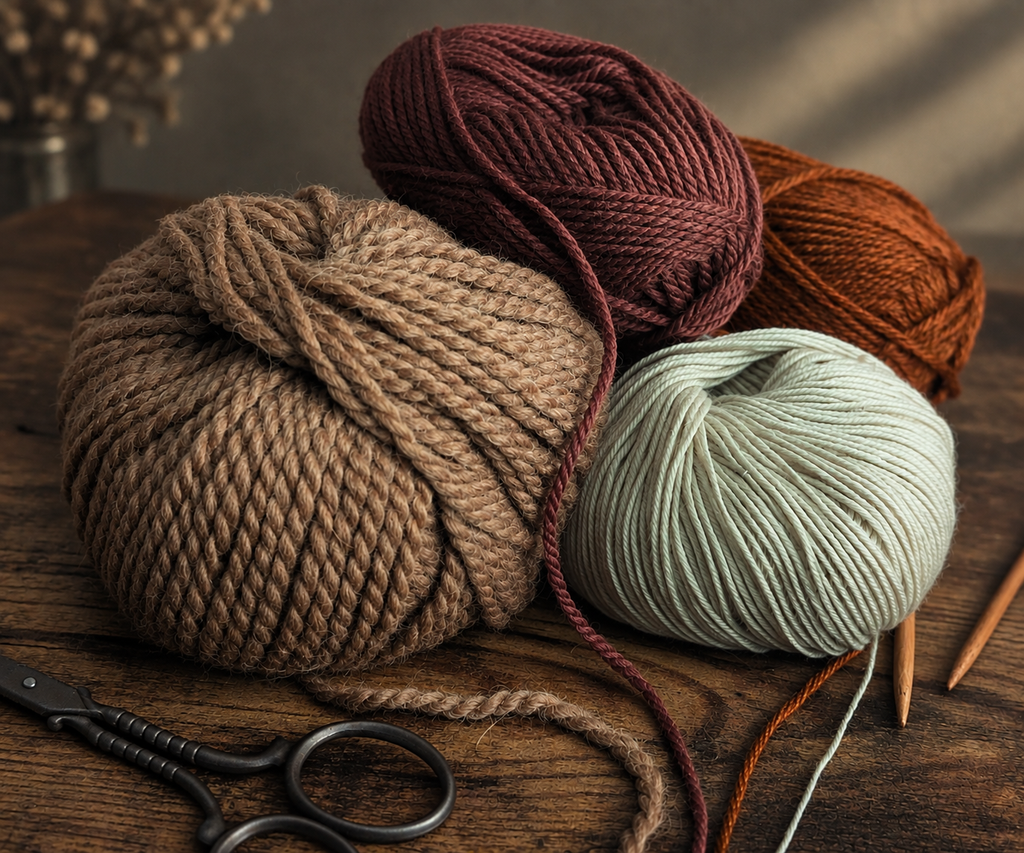
Despite how it sounds, yarn weight is not about how heavy the yarn feels. It simply describes the thickness of the strand.
- Thinner yarns create lighter, more delicate fabricThicker yarns create warmer, sturdier, more structured fabric
Yarn weight influences:
- How your stitches appear
- How your fabric drapes
- How fast your project grows
- What size needles or hooks you’ll need
- How warm or structured the finished piece feels
It’s one small detail that quietly shapes everything.
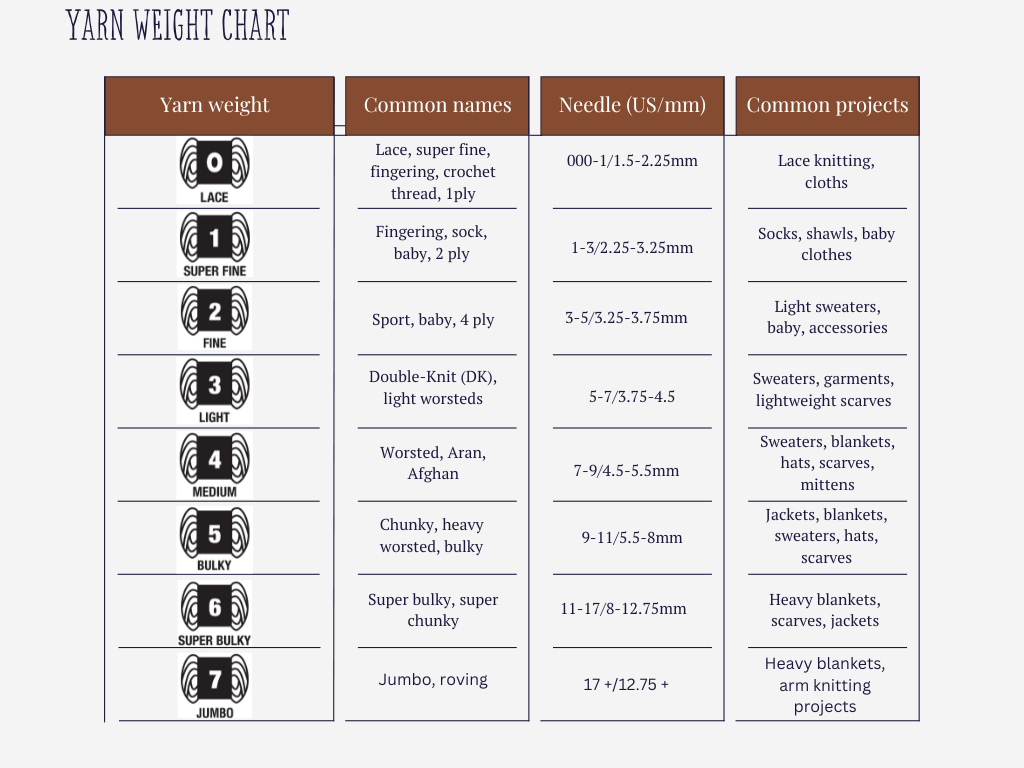
Yarn Weight Chart Overview (0–7)
Most yarn labels follow a standard scale from 0 to 7, usually showing:
- The yarn weight number and name
- Recommended needle or hook size
- Common gauge ranges
- Typical project types
Lace Weight (0)
Lace weight is the finest and most delicate yarn available. The strand is almost thread-like, creating fabric that feels airy, translucent, and nearly weightless. It doesn’t build density so much as it builds space between stitches. Light moves through it freely, giving lace its floating quality. Working with it requires patience and steady tension, but once your hands settle into its rhythm, it becomes deeply meditative.
Super Fine / Fingering Weight (1)
Fingering weight yarn is thin yet surprisingly strong. It feels delicate in your hands but forms fabric that’s durable, refined, and beautifully detailed. The drape is soft and flexible. This weight invites slow, intentional stitching, the kind that turns time itself into texture.
Fine / Sport Weight (2)
Sport weight sits gently between very fine and medium yarns. It feels light without being fragile and creates fabric that’s smooth, fluid, and quietly balanced. Stitches settle close together, giving a clean, graceful structure that never feels heavy.
Light / DK Weight (3)
DK weight is where many makers start to feel truly at home with yarn. It’s soft, forgiving, and easy to control. The fabric it creates is light yet warm, structured yet flexible. DK often feels like a gentle presence in the hands; steady, reliable, and comforting without being overwhelming.
Medium / Worsted Weight (4)
Worsted weight is the steady heartbeat of the yarn world. Thick enough to feel satisfying, yet not so bulky that it becomes cumbersome. The resulting fabric is warm, stable, and holds its shape beautifully. Stitches are clearly visible, progress feels reliable, and the final piece feels familiar and wearable.
Bulky Weight (5)
Bulky yarn is where warmth becomes instant. The strands are thick and plush, and each stitch builds quickly. The fabric feels dimensional, textured, and deeply insulating. This is the weight that rewards you with visible progress and tangible comfort almost immediately.
Super Bulky Weight (6)
Super bulky yarn is bold and dramatic. Each stitch is full and cushiony, and the fabric becomes thick and cloud-like with very little effort. This weight is less about intricate detail and more about sculpting warmth directly with your hands.
Jumbo Weight (7)
Jumbo yarn is the thickest of all yarn weights. Strands can be as wide as your fingers, turning stitches into sculptural forms. The fabric becomes dense, heavy, and powerfully present. Working with jumbo yarn feels physical and grounding — more like building soft architecture than traditional knitting.
What Is WPI (Wraps Per Inch)?
Sometimes yarn labels are missing, confusing, or inaccurate. This is where WPI (Wraps Per Inch) becomes your quiet little secret.
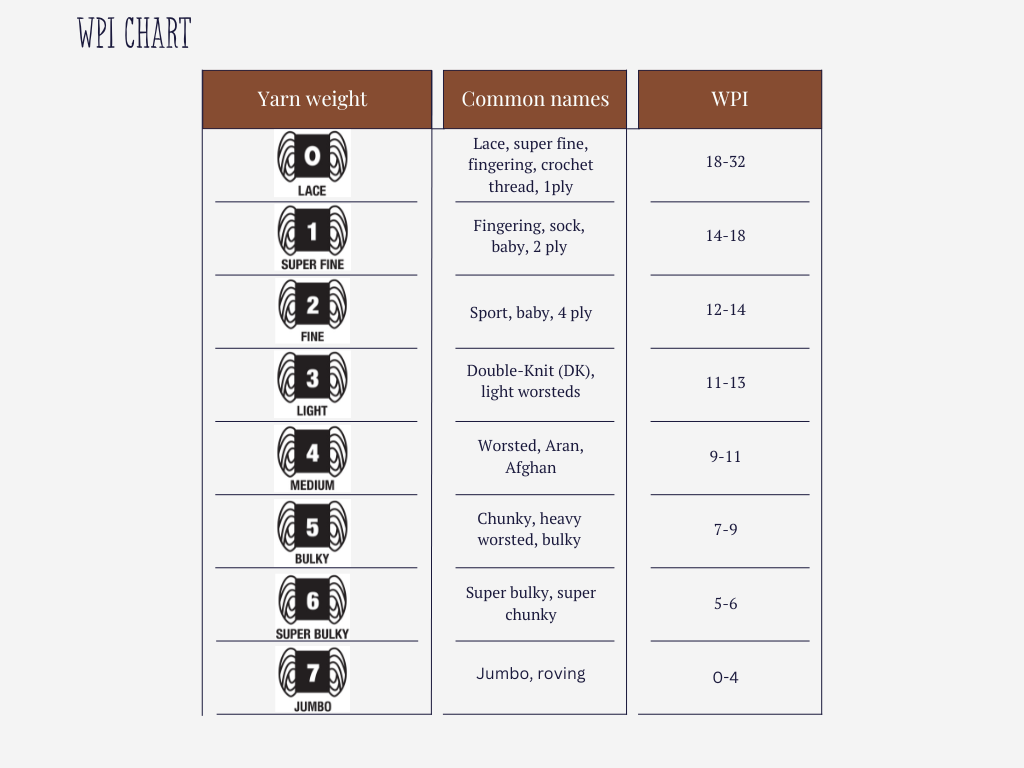
WPI measures how many times a strand of yarn can wrap around a ruler within one inch (without stretching or overlapping). The more wraps you fit into that inch, the thinner the yarn.
- Higher WPI = thinner yarn
- Lower WPI = thicker yarn
This chart shows the WPI in relationship to the yarn weights:
WPI is especially helpful when:
- You’re working with unlabeled yarn
- You’ve thrifted or salvaged yarn
- You want to substitute one yarn for another
It’s a tactile, hands-on way of letting the yarn reveal its true weight.
Why Yarn Weight Gently Shapes Every Project
Even when two yarns look similar, their weight can completely change how a project behaves.
- A lighter yarn may create something flowing and delicate
- A heavier yarn may create something bold and structured
Yarn weight quietly controls:
- Warmth
- Texture
- Stretch
- Drape
- Structure
It doesn’t just affect how your project looks, it shapes how it feels when you wear it, use it, or wrap yourself inside it.
A Gentle Guide for Beginners
If you’re just starting out, two yarn weights are especially forgiving:
- Worsted (4): Balanced, steady progress
- Bulky (5): Quick, confidence-boosting results
Charts and labels are helpful, but your hands are the best guide. Even yarns of the same weight can feel different, light, springy, dense, or soft. Trust what feels right to you.
Yarn weight sets the mood of your project: light and delicate, balanced and wearable, or thick and grounding. Take your time, notice the yarn, and enjoy the process.